Parting braids are less a hairstyle and more a deliberate geometry lesson on your scalp. The trend this season leans into soft face-framing layers and lived-in color, but the foundation, a precise, clean parting, is what gives these braids their staying power.
This collection of 24 looks ranges from quick weekend braids to salon-only geometric patterns, so there is something for every texture and tolerance for upkeep. If fine braids that slip or a middle part that refuses to stay straight has ever sent you back to the mirror, these styles offer a fix that holds. Parting Braids are the answer when you want the braid itself to look intentional, not accidental.
Mid-Back Box Braids With Geometric Parting
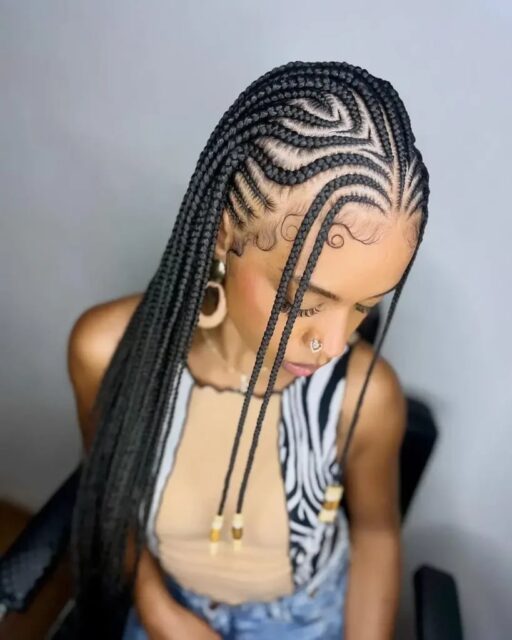
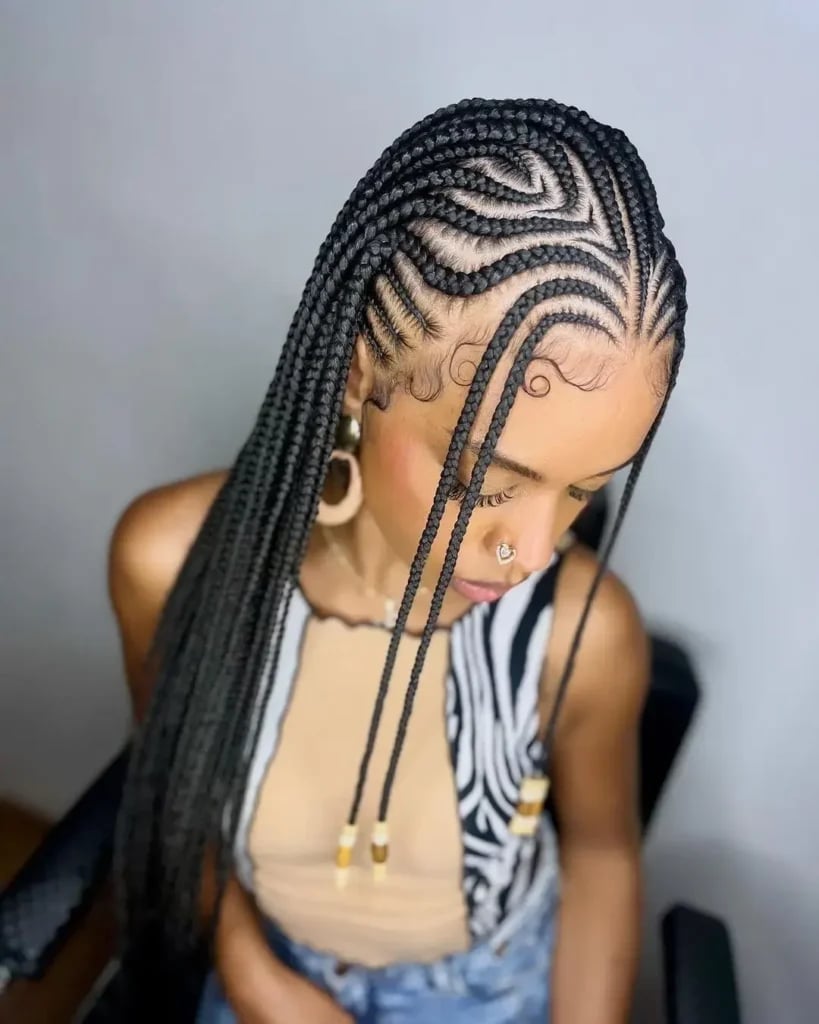
The scalp becomes the canvas here: a precise geometric parting pattern carved into clean, straight rows of mid-back length black box braids. Each section is a uniform rectangle, which means the installation requires a steady hand and a stylist who treats the comb like a ruler. Thick, straight hair holds the shape best, and the middle part keeps the design symmetrical. Ask your stylist for: box braids with geometric parting, mid-back length. The parting lines stay crisp for weeks if you keep the scalp moisturized and trim any flyaways.
Mid-Back Box Braids In A High Ponytail
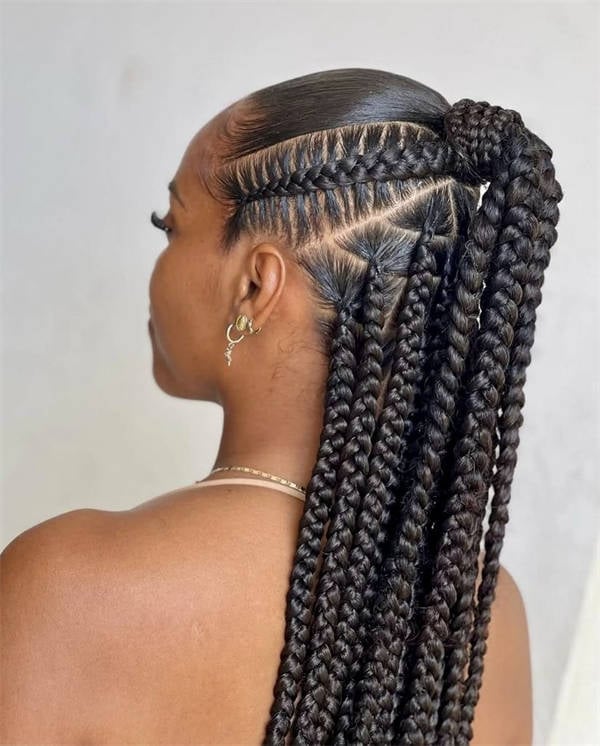
How do you keep a geometric scalp design visible when your hair is up? Pull it into a high ponytail that lifts the braids off the shoulders and puts the partings on full display. These mid-back length black box braids are gathered at the crown, and the slicked-back forehead keeps the line clean from root to tip. Thick, straight texture works best for this, since finer hair might not hold the ponytail’s weight as well. Ask your stylist for: box braids in a high ponytail with geometric scalp partings. Wrap a few braids around the elastic for a seamless finish that hides the band.
Shoulder Length Braids With Geometric Parting
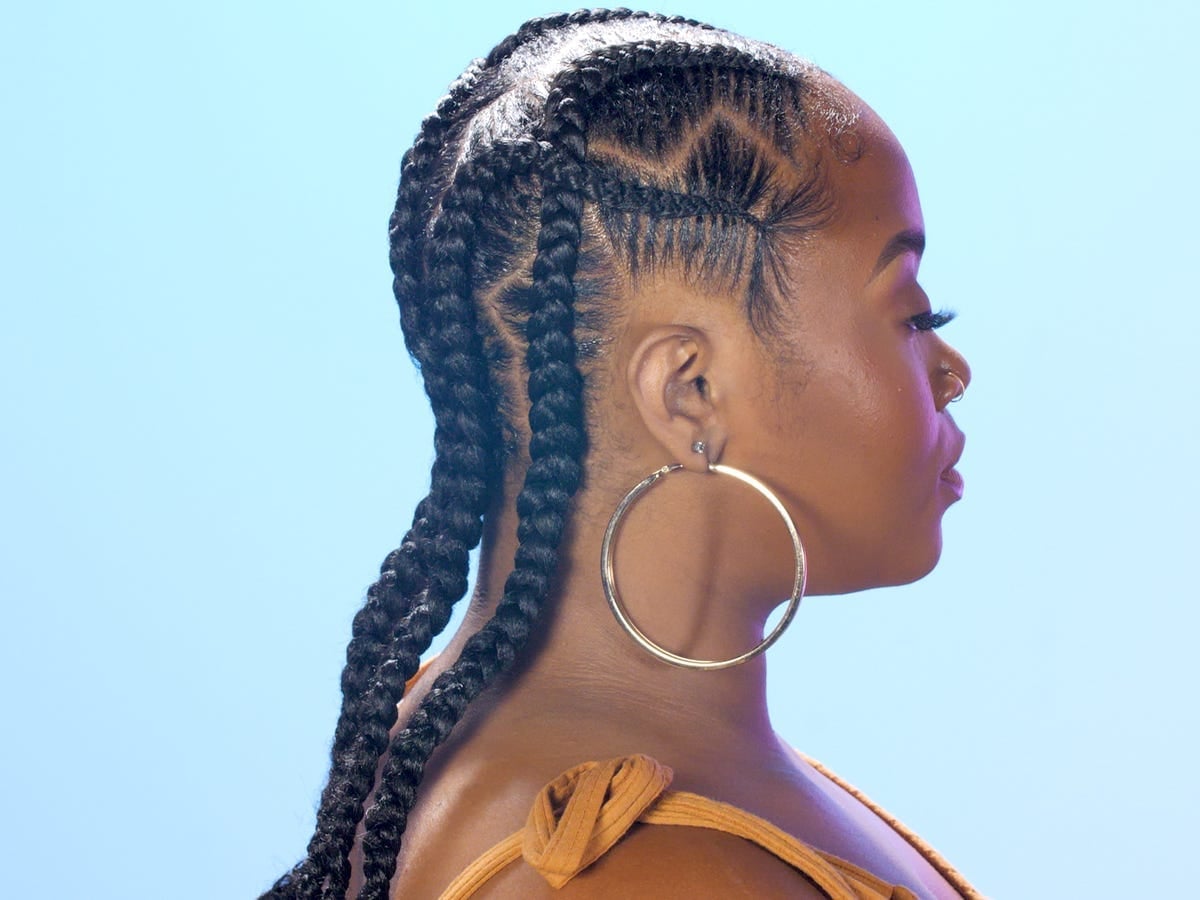
Shoulder-length braids show off a geometric scalp design faster than longer ones, but mid-back length gives the pattern more real estate to read. These black braids land at mid-back, with straight, thick sections and a geometric parting that runs from the hairline to the crown. The extra length adds weight, so the braids hang straight and the parting stays visible. Ask your stylist for: braids with geometric scalp parting, mid-back length. Thick hair holds the shape without the parts widening over time, and a scalp serum keeps the lines sharp.
Mid-Back Ombre Box Braids With Diamond Parting
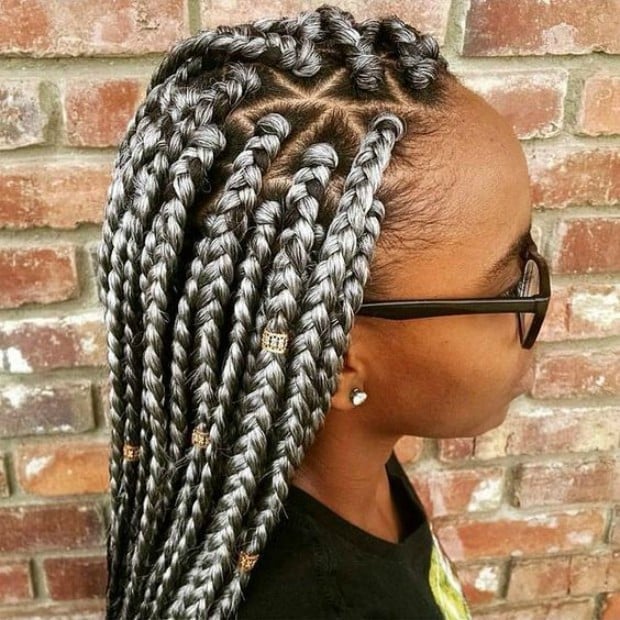
The diamond parting at the crown turns this into a geometric statement before the braids even start. These mid-back length box braids shift from black at the roots to gray toward the ends, with a wavy, thick texture that softens the transition.
Ask your colorist for: gray and black ombré box braids with diamond scalp partings. The ombré requires a color-safe shampoo and conditioner to keep the gray from turning brassy, and a few gold beads add a small accent without overwhelming the design. The parting holds best when the scalp is moisturized regularly, and the braids stay fresh for about four to six weeks before the roots need a touch-up.
Mid-Back Fulani Braids With Geometric Parting, Black
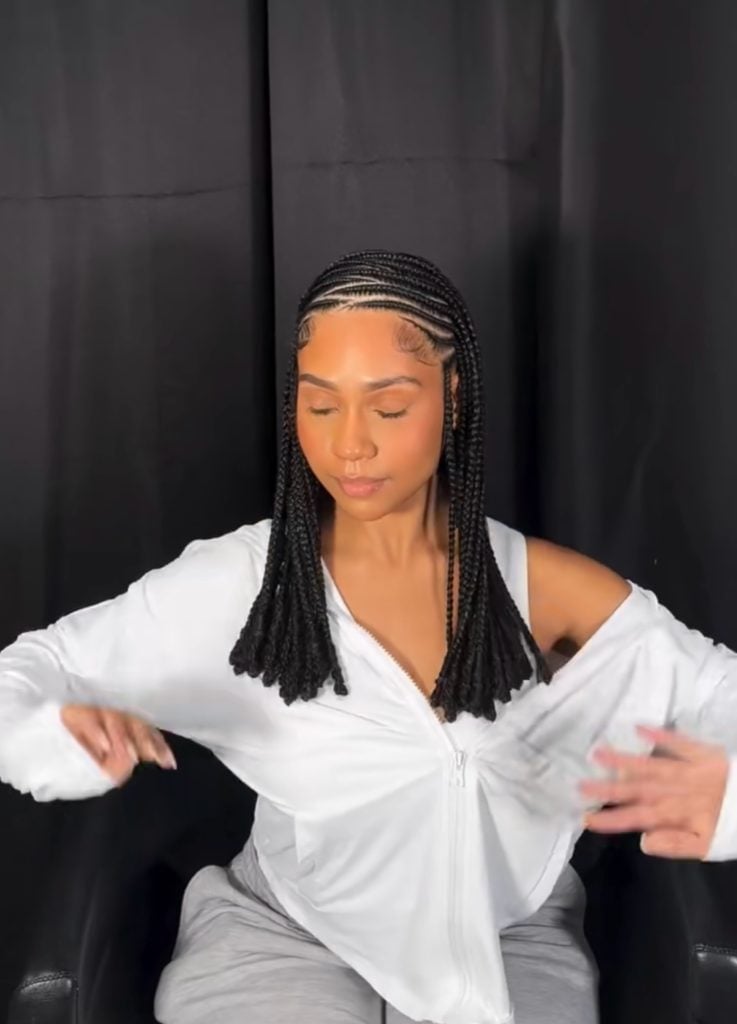
Fulani braids rely on a central line and geometric side patterns, and this version runs the design from the hairline to the mid-back. Thick, wavy black braids fan out from a middle part, with loose face-framing tendrils left out to soften the edges. The geometric scalp parting is the focal point, and it demands a stylist who maps the sections before braiding. Ask your stylist for: Fulani braids with geometric scalp design and face-framing tendrils. The tendrils need a light cream to stay neat, but the braids themselves hold their shape for weeks without much effort.
Mid-Back Blue And Black Box Braids
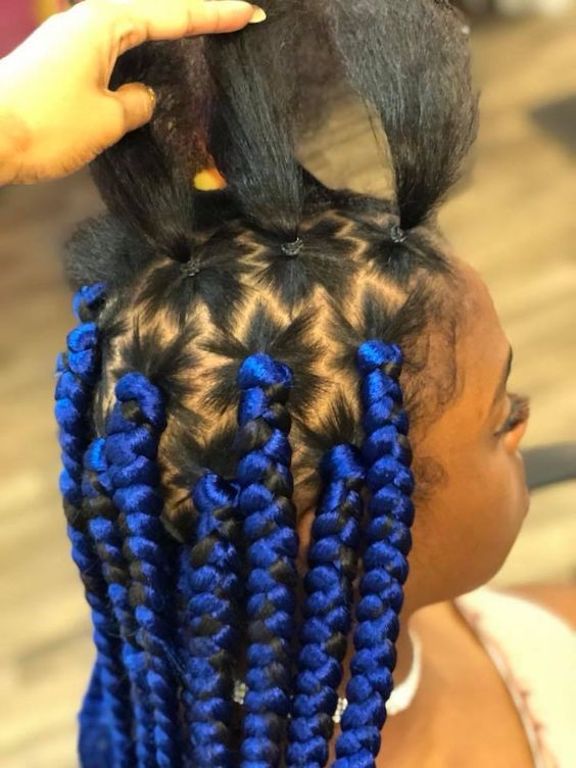
Wondering if blue and black box braids work outside of a music festival? The side view of these thick, mid-back braids with a middle part makes the case: the vibrant blue against black reads as a deliberate color choice. Ask your stylist for: blue and black box braids with a middle part. Thick hair at mid-back length handles the color saturation best. Use color-safe products to preserve the blue tones, and trim the ends to keep them neat.
Mid-Back Black Cornrows With Straight Parting
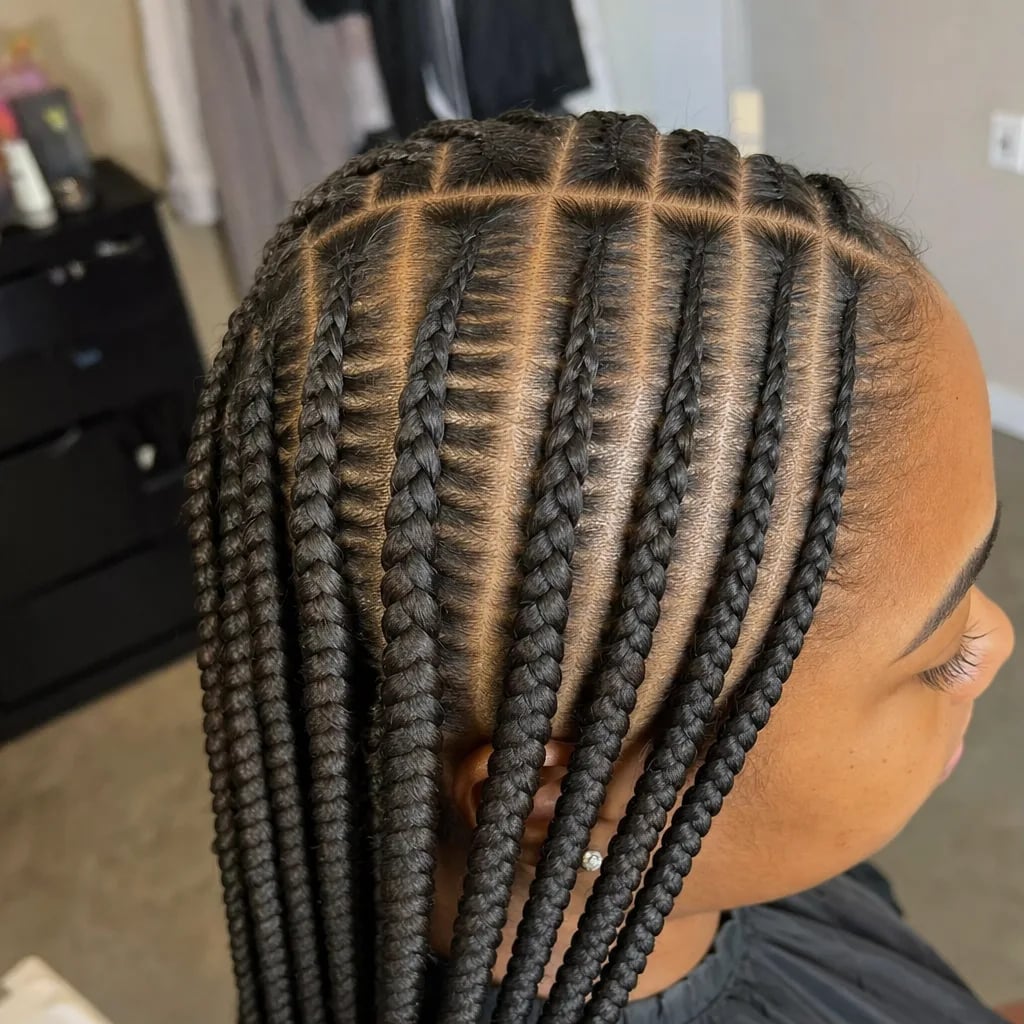
Cornrows with a straight line parting look precise in the chair, but the real question is how they hold. These thick, black cornrows run in neat parallel rows to mid-back, and that sharp parting is the feature that needs maintenance. Ask your stylist for: cornrows with precise straight partings, mid-back length. It suits thick, straight hair that can handle the tension without lifting the scalp lines. Apply a light oil to the parting every few days to prevent dryness. The honest drawback: a stray hair or a loose edge shows more against that geometric grid, so a touch-up visit at three weeks is realistic.
Mid-Back Brown Box Braids With Dimension
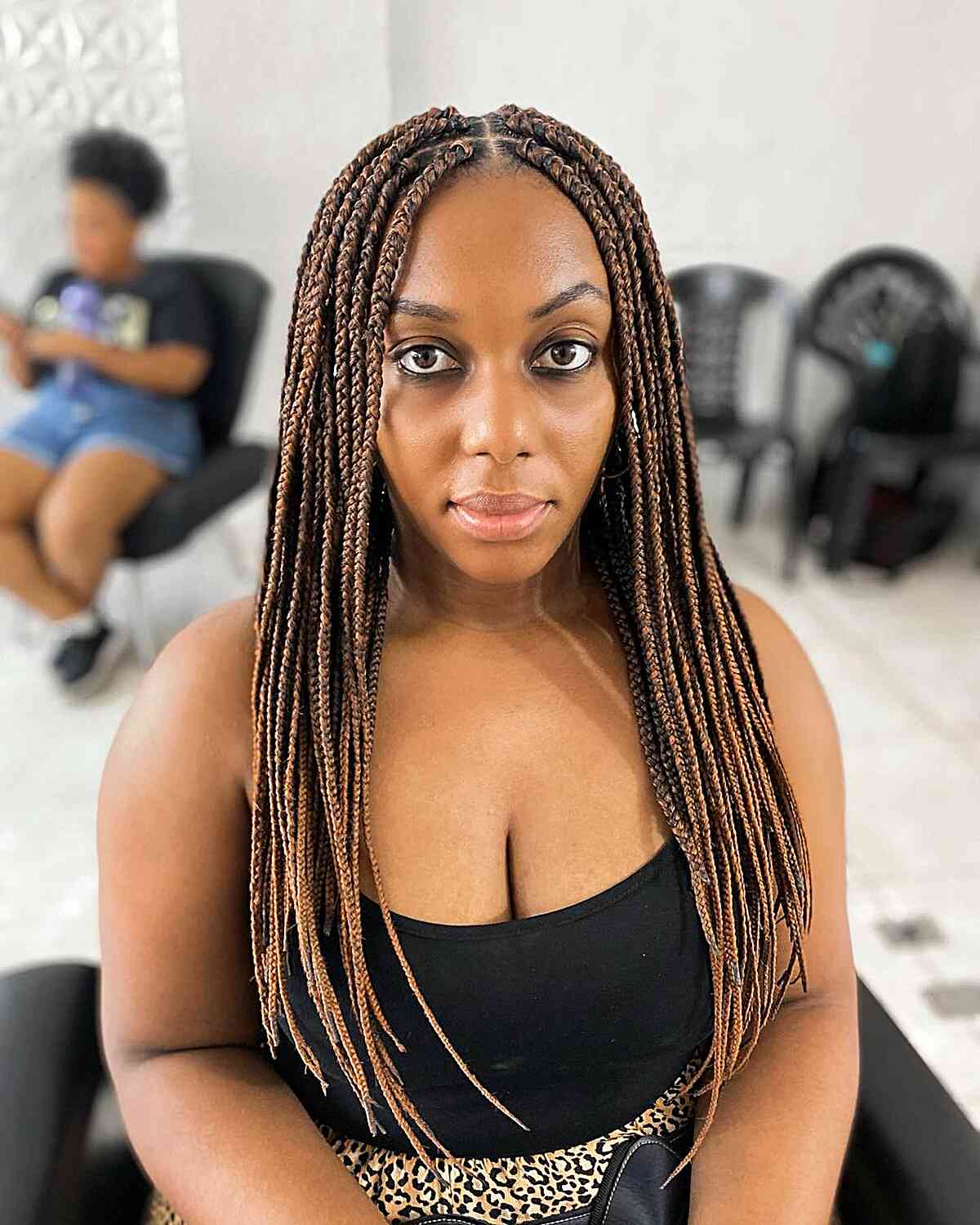
The front view of these long, uniform box braids shows a middle part and a brown base that shifts to lighter brown at the ends. That subtle dimension keeps the style from looking flat, which matters when the braids are all the same thickness and texture. Ask your stylist for: brown box braids with lighter brown ends, middle part. Medium-density, straight hair at mid-back length benefits from the color variation, since the lighter ends add visual movement without extra bulk. A lightweight oil on the ends prevents frizz and keeps the length smooth.
Mid-Back Feed-In Braids With Curled Ends
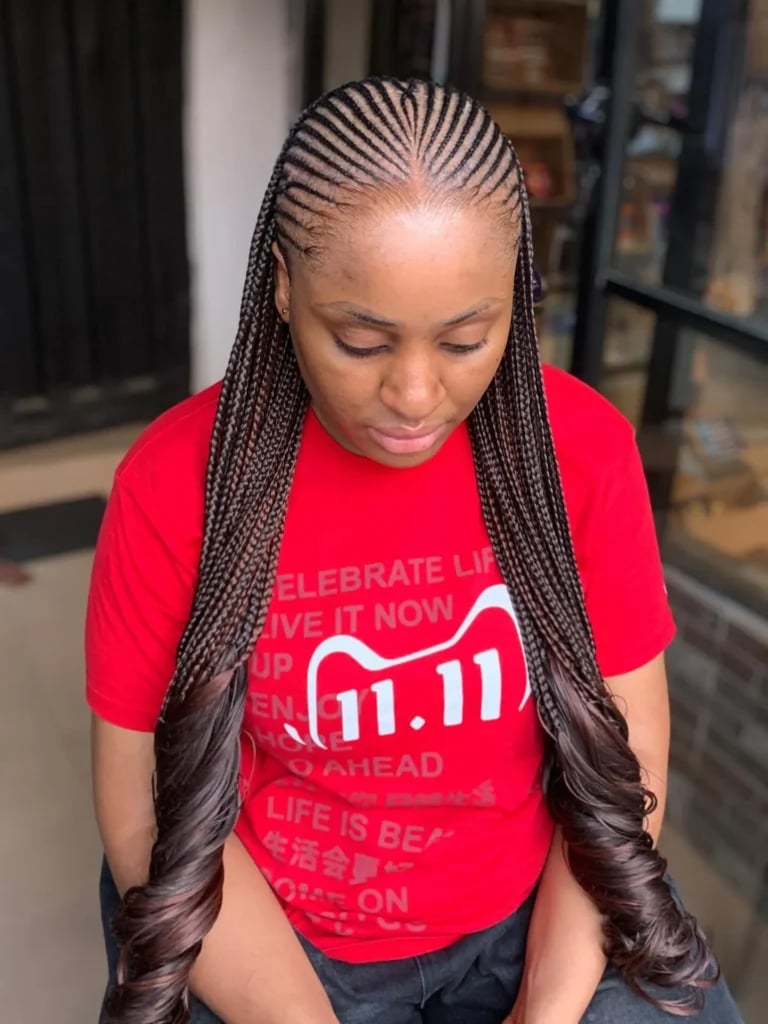
Ask your stylist for: feed-in braids with curled ends, middle part. Thick, straight hair at mid-back length gives the braids enough weight to hang well while the curl stays visible. Use a heat protectant before curling, and twist the ends into a loose bun overnight to preserve the shape.
Mid-Back Coily Box Braids With Highlights
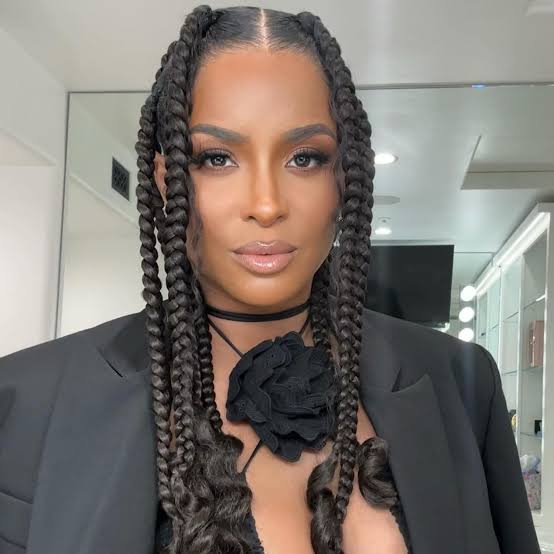
A front view of these large box braids reveals a middle part and a black base with subtle lighter highlights running through the coils. The coily texture gives the braids a wider silhouette than straight hair would, which changes how they wear over time. Ask your stylist for: large box braids with subtle highlights, middle part. Thick, coily hair at mid-back length can carry the volume without the braids feeling heavy. A hydrating leave-in conditioner keeps the coils defined and prevents the highlights from looking ashy. The highlights fade faster on coily textures, so a gloss treatment at eight weeks helps maintain the dimension.
Mid-Back French Braids With Short Fringe
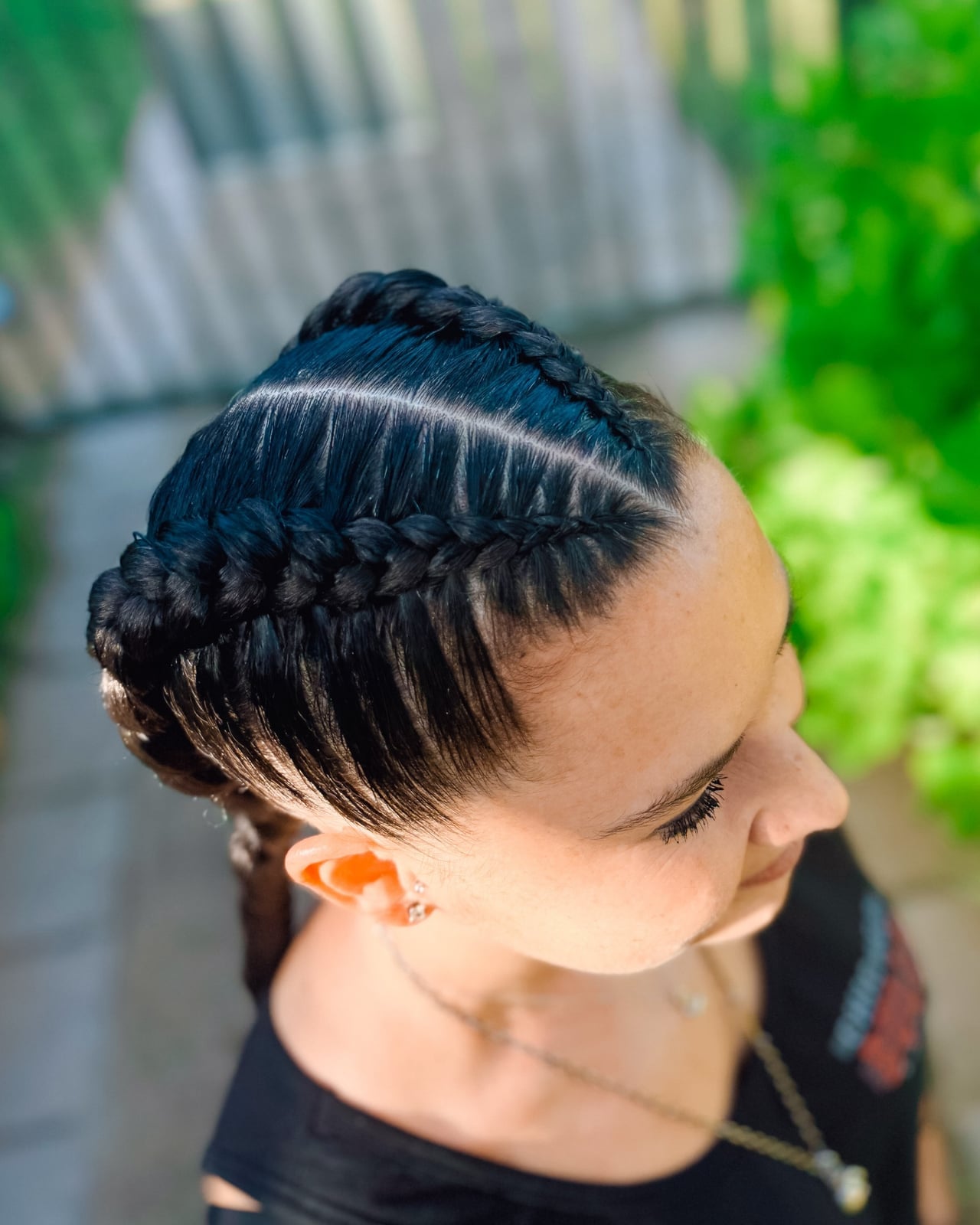
Two thick French braids from a sharp middle parting only work if the short fringe is cut to sit cleanly with the braid tension, not pulled into the weave. The style suits thick, straight hair at mid-back length where the parting lines stay crisp. Ask your stylist for: two french braids with a short fringe, sharp middle part. The fringe needs a trim every four to six weeks to keep its shape; otherwise it wanders into your face and the precision of the braids gets lost.
Mid-Back Black French Braids With Wispy Bangs
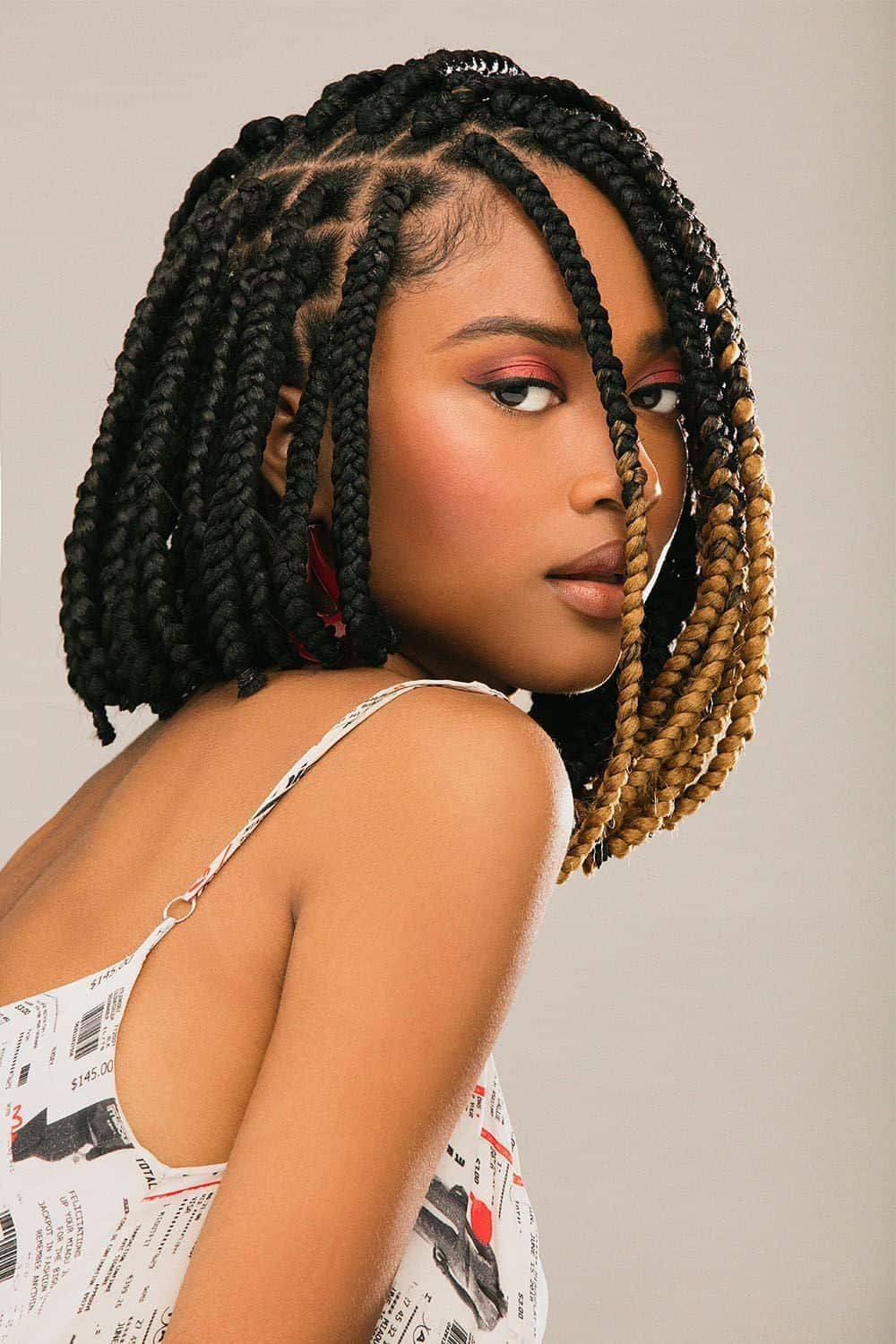
The design starts at the hairline: two neat French braids are built from a middle parting, with the wispy bangs left out to soften the look. Thick, straight hair at mid-back length holds the braid tension best, keeping the weave symmetrical from crown to ends. Ask your stylist for: two neat French braids with wispy bangs, middle part. A texturizing spray gives the bangs definition without weighing them flat, and the braids should be placed evenly so the part stays straight.
Mid-Back Blonde Three-Strand Braid
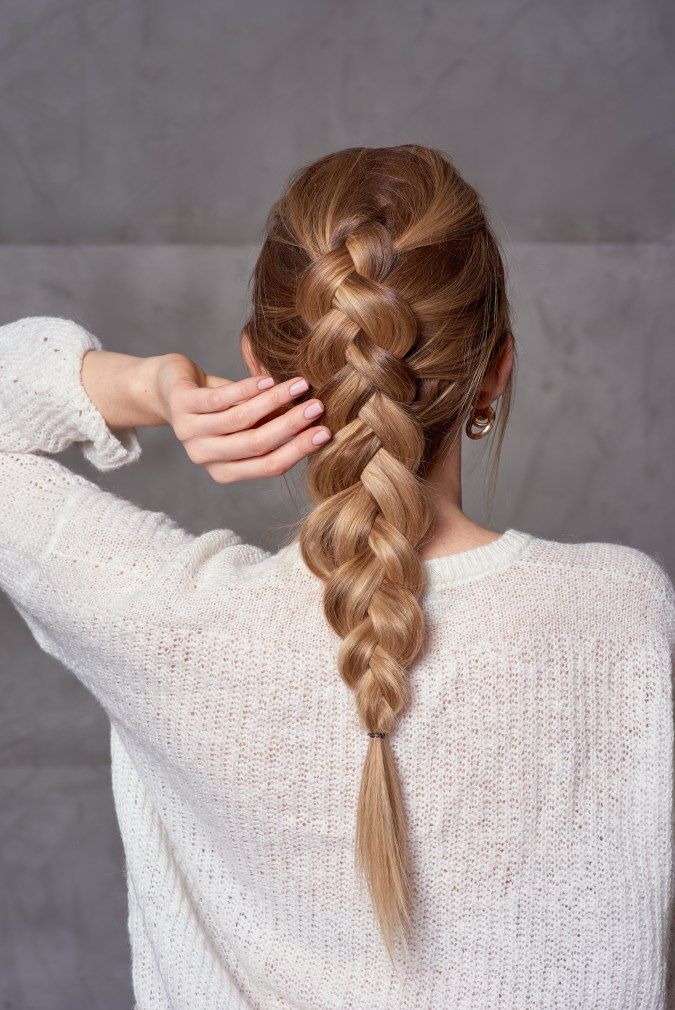
A single thick three-strand braid feels more relaxed than multiple braids, which look deliberately sectioned. This version works for thick, wavy hair at mid-back length, where the natural texture gives the braid body. Ask your stylist for: thick three-strand braid, middle part, mid-back length. The blonde color catches light along each strand, so a texturizing spray helps the wave stay visible in the weave. Braid while hair is slightly damp for a hold that lasts through the day.
Mid-Back Blonde Three-Strand Braid, Close-Up Take
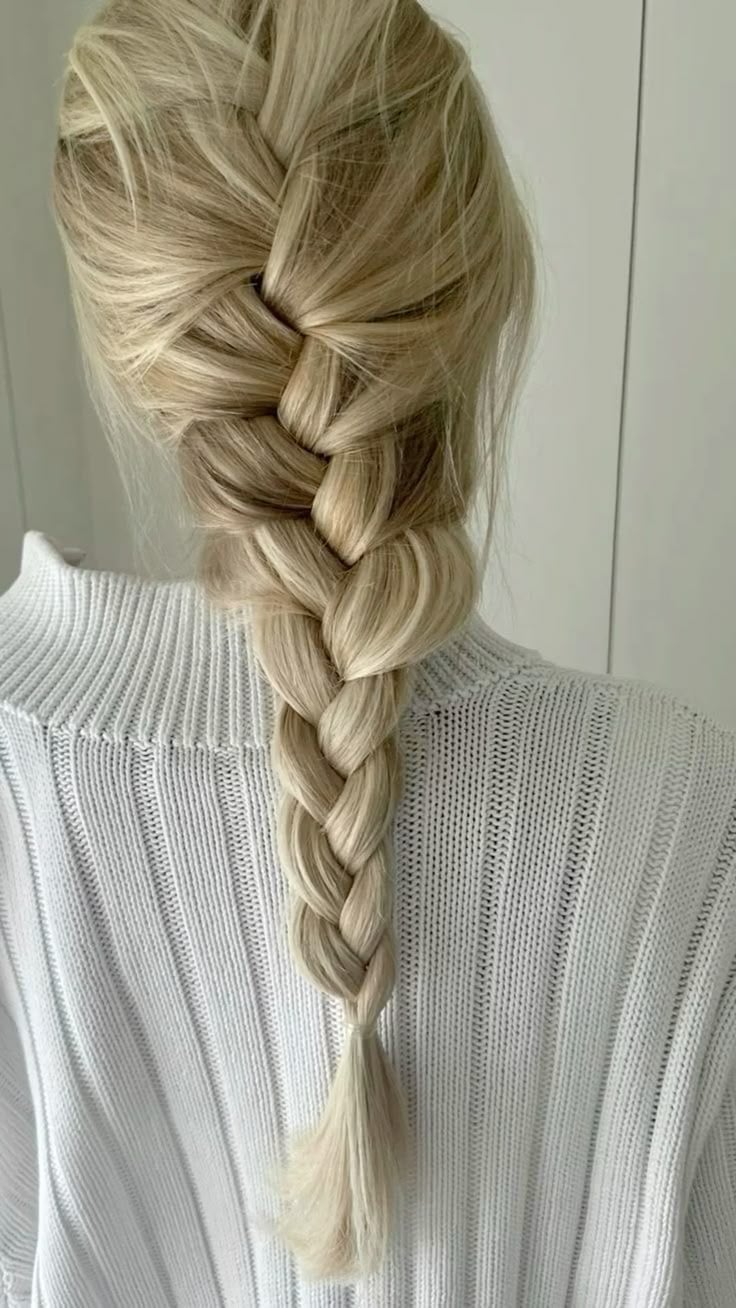
A thick three-strand braid in wavy blonde hair relies on even tension from crown to ends to keep the weave from loosening. The middle part splits the hair cleanly, and the braid sits at mid-back, where its weight pulls it straight.
Ask your stylist for: thick three-strand braid, middle part, mid-back length. For daily wear, apply a texturizing spray to damp hair before braiding to add grip and volume. Re-braid every one to two days to maintain the structure; sleeping on a silk pillowcase helps prevent frizz at the edges.
Collarbone Length Double Braids With Highlights
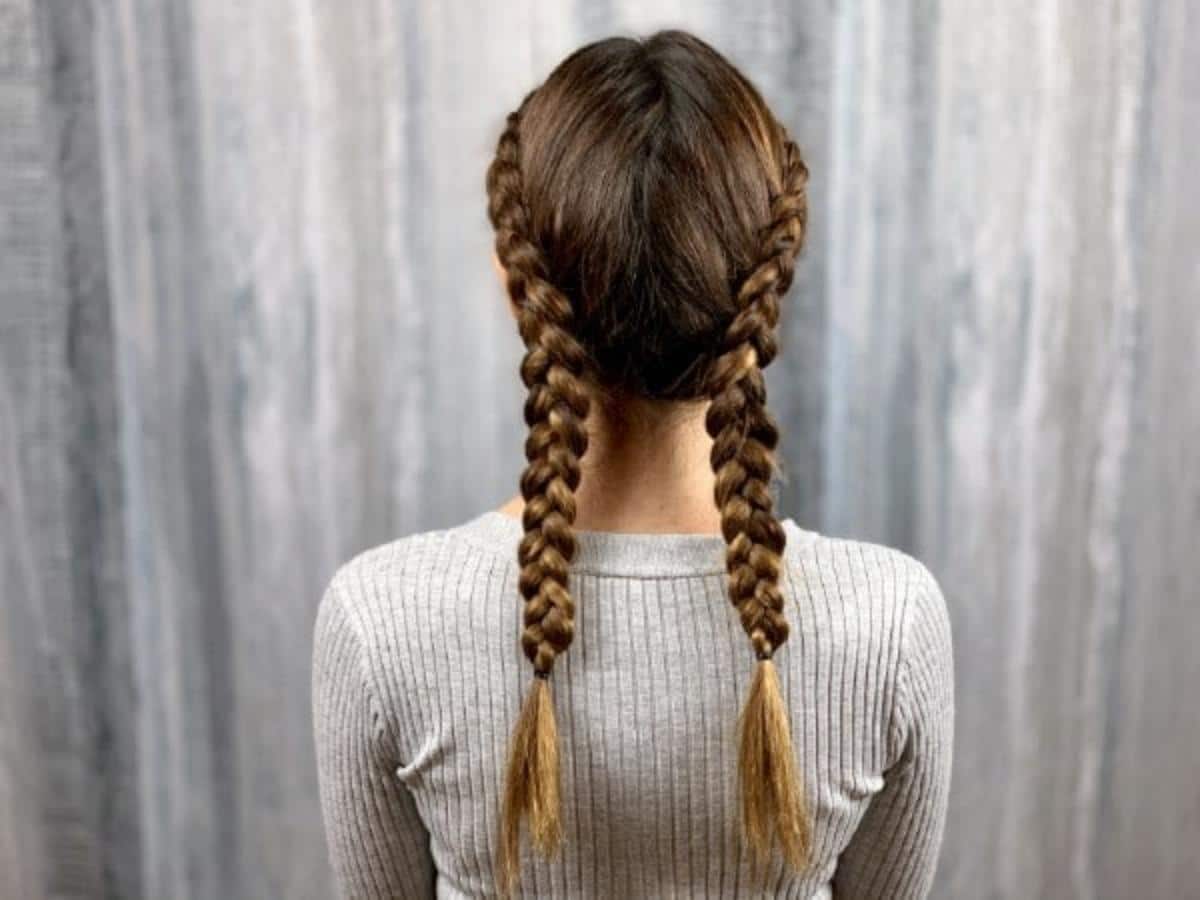
Two classic braids at collarbone length keep the weight off the nape and show off the blonde highlights woven through medium brown hair. The style suits medium density, wavy hair where the braids hold their shape without slipping. Ask your stylist for: collarbone length double braids with blonde highlights. A shine serum on the finished braids makes the color contrast read clearly, and re-braiding every few weeks keeps the parts from getting fuzzy.
Shoulder Length Box Braids With Grid Parting
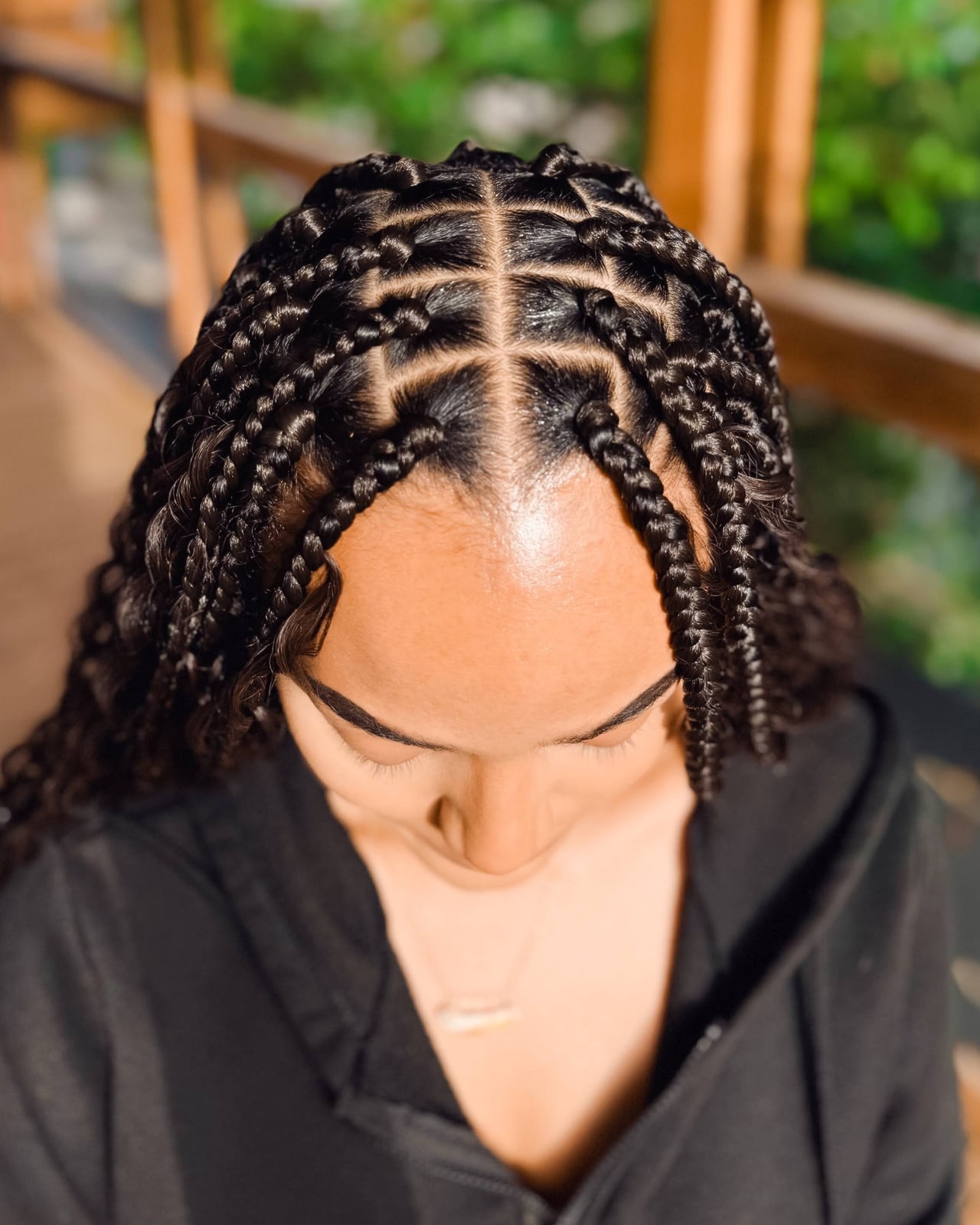
The grid parting creates a precise, clean look on your scalp. These shoulder-length box braids are parted into neat squares, forming a geometric pattern that stays visible even from a top-down view. The dark brown color and wavy thick texture add depth, while the shoulder length keeps the style practical for autumn events. Ask your stylist for: box braids with a grid parting, shoulder length. Apply a light scalp oil to the parting lines to keep them hydrated and defined, ensuring the braids remain evenly sized and the pattern stays sharp.
Shoulder Length Double Dutch Braids With Highlights

It is not a simple three-strand braid, it is a Dutch braid with that raised, inverted look that makes the parting more pronounced. These shoulder-length double Dutch braids start from a side parting, with subtle lighter highlights woven through the dark brown base for dimension. The wavy thick texture gives the braids body, so they hold their shape without slipping. Ask your stylist for: double Dutch braids with highlights, side parting. Use a volumizing spray on the roots before braiding to enhance the structure, and keep the highlights fresh with a color-depositing conditioner every few washes.
Collarbone Length Box Braids With Wavy Ends
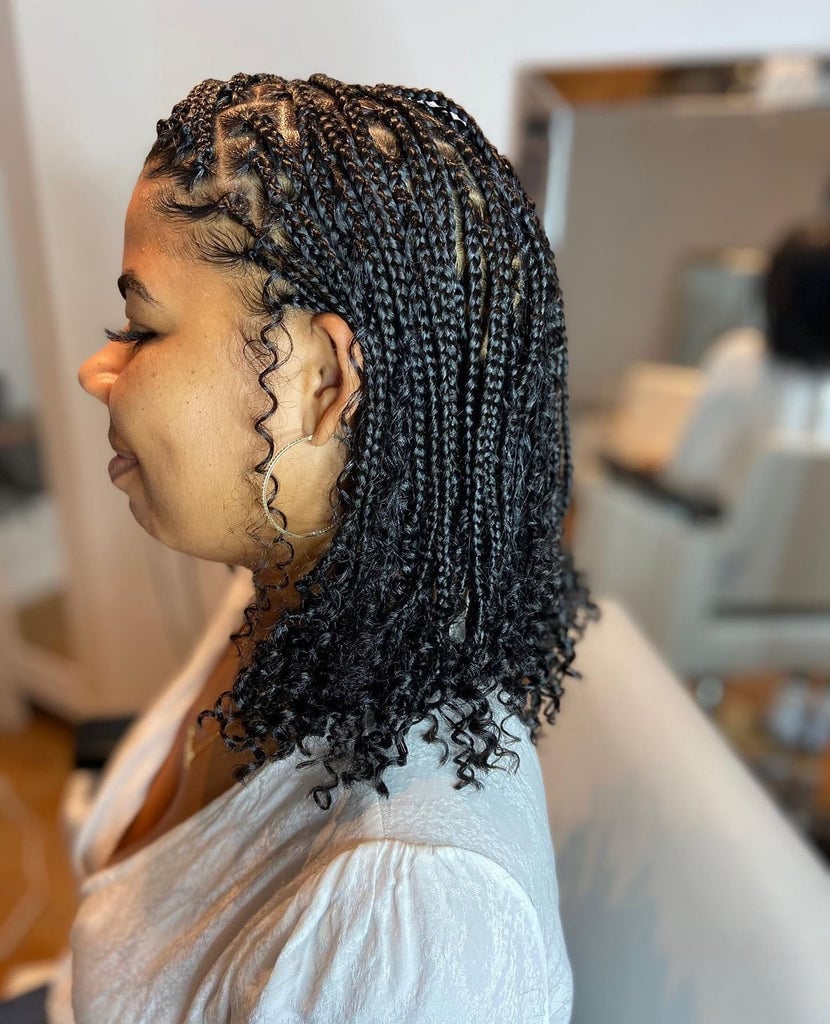
The curly ends are the real story here, giving these collarbone-length box braids a playful finish that a straight end just cannot match. The thick wavy texture and black color keep the look unified, while the middle parting keeps the scalp visible and the design clean. This is a salon-only style, and the curly ends need daily attention to hold their shape. Apply a curl-defining cream to the ends each morning, and trim any frizzy strands weekly to keep the texture intact.
Collarbone Length Chunky Box Braids
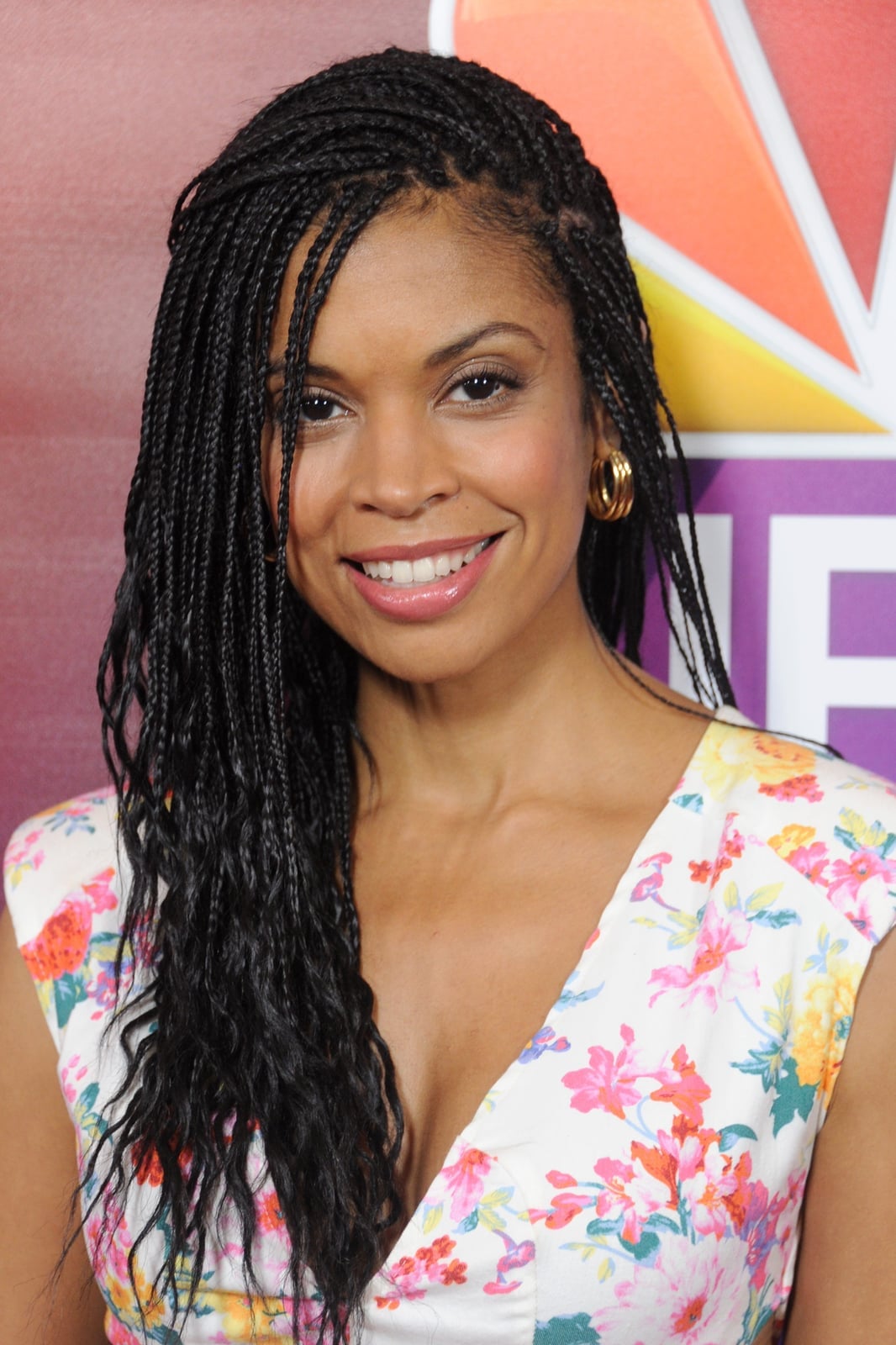
These are short, chunky box braids, and the technique is straightforward: each section is larger than standard braids, which speeds up the installation. The collarbone length and middle parting keep the style balanced, while the straight, medium density texture makes the braids sit flat and uniform. The black color gives them a solid, graphic look that does not compete with the parting. Ask your stylist for: short, chunky box braids, collarbone length, middle part. The result is a bold, low-maintenance style that holds its shape well.
Shoulder Length Micro Braids
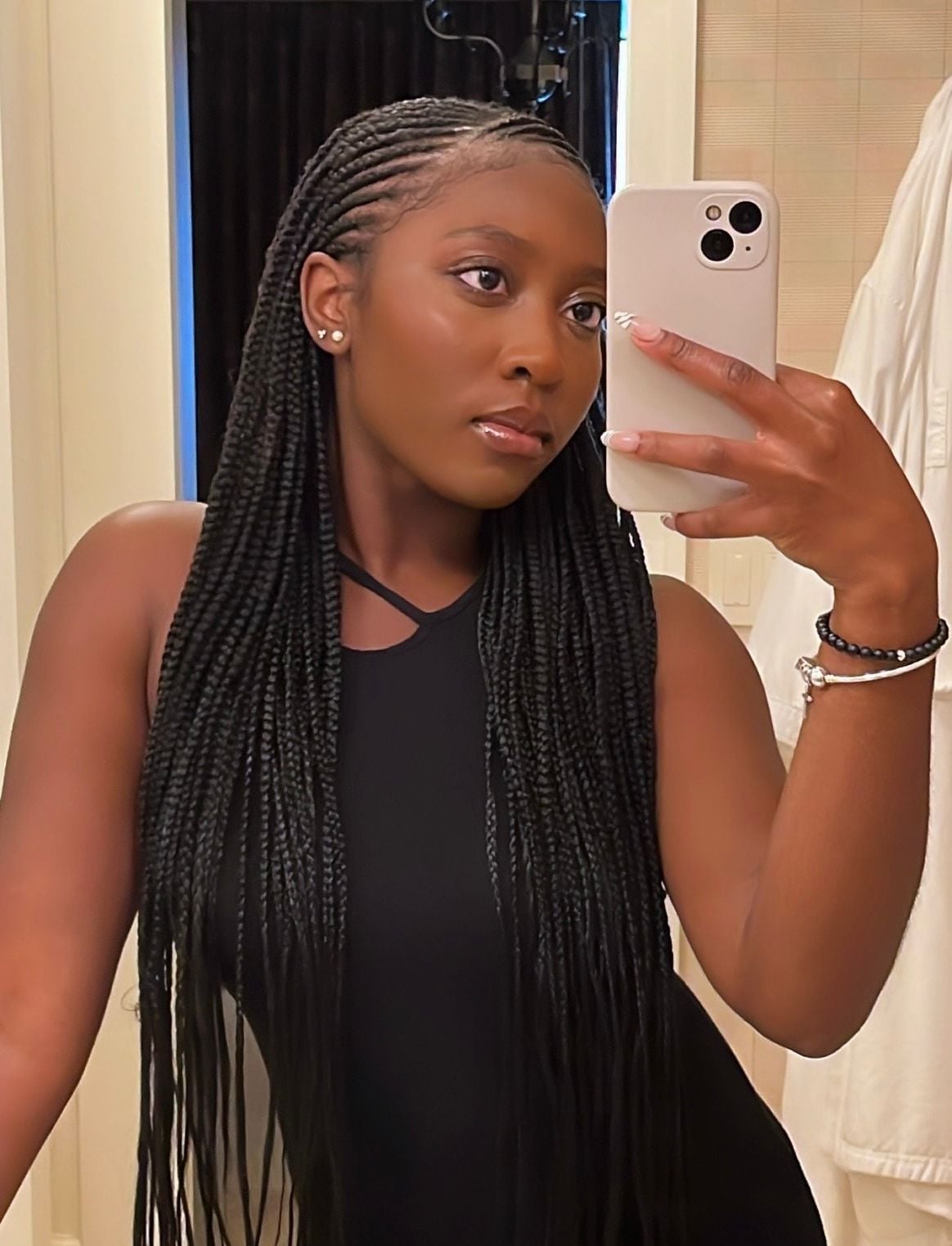
Dense micro braids at shoulder length are a test of patience for the stylist and a reward for the wearer. The fine, straight texture and black color allow the braids to lie close to the scalp, making the middle parting look sharp and deliberate. This style suits those with fine hair who want the look of a full head of braids without the weight of thicker sections. Ask your stylist for: dense micro braids, shoulder length, middle part.
The delicate nature of micro braids means they work best on straight, fine textures that can hold the small sections without slipping. A round face benefits from the shoulder length, which adds vertical lines without overwhelming the face. Apply a light oil to the scalp to prevent dryness, and avoid excessive heat to keep the braids looking fresh.
Mid-Back Fine Micro Braids

Densely packed micro braids are a lesson in patience and precision. The uniform thickness and straight, fine texture create a sleek, orderly finish that looks meticulous rather than casual. This style works best on fine, straight hair at mid-back length, where the weight of the braids hangs evenly.
Ask your stylist for: very fine micro braids, mid-back length, middle part. The salon visit is a full-day commitment, but this style holds its shape for weeks with minimal daily effort. Use a lightweight serum on the part line to keep flyaways in check, and sleep with a satin scarf to reduce friction. A trim every eight weeks keeps the ends from thinning out.
Mid-Back Pull-Through Braids With Blonde Color

A pull-through braid mimics the look of a complex weave without the hours of sectioning. Two braids run from a middle part down to mid-back, with the remaining hair left loose for a blended, wavy finish. This style takes under thirty minutes to create at home. Start with fine, wavy hair at mid-back length, then spritz a texturizing spray through the midsection for grip. Ask your stylist for: two pull-through braids with loose hair, middle part. Divide the hair into two high ponytails, then split each into top and bottom sections. Pull the bottom section up through a gap in the top, then repeat down the length. Gently tug each loop outward for volume, and you are done.
Mid-Back Dutch Braids With Textured Appearance
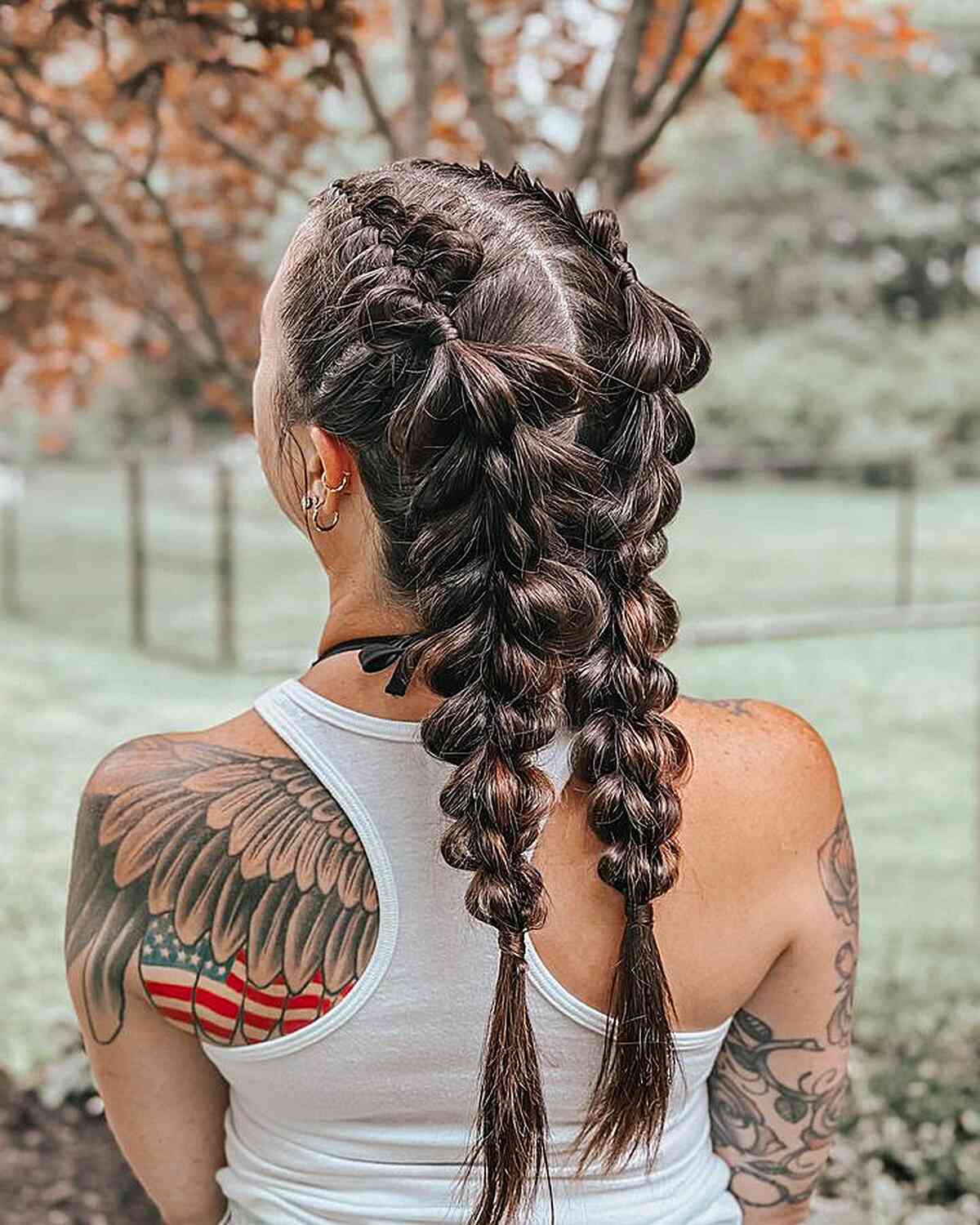
A Dutch braid is the inverse of a French braid: the strands cross under the middle section instead of over, which pushes the braid upward off the scalp. This creates a raised, three-dimensional ridge that gives thick, wavy hair a voluminous, almost sculptural look. Here, two Dutch braids start at the hairline and travel down to mid-back, with the ends left loose to soften the finish.
The dark brown base color keeps the focus on the braid structure. Ask your stylist for: two Dutch braids with loose ends, middle part. This technique demands a steady hand and some finger strength, so it leans toward the salon side of the spectrum. Once finished, gently pinch the outer edges of each braid to expand the weave and create that intentionally undone texture. A medium-hold finishing spray keeps the shape intact without stiffening the hair.
Long Dark Brown Box Braids With Face-Framing Pieces
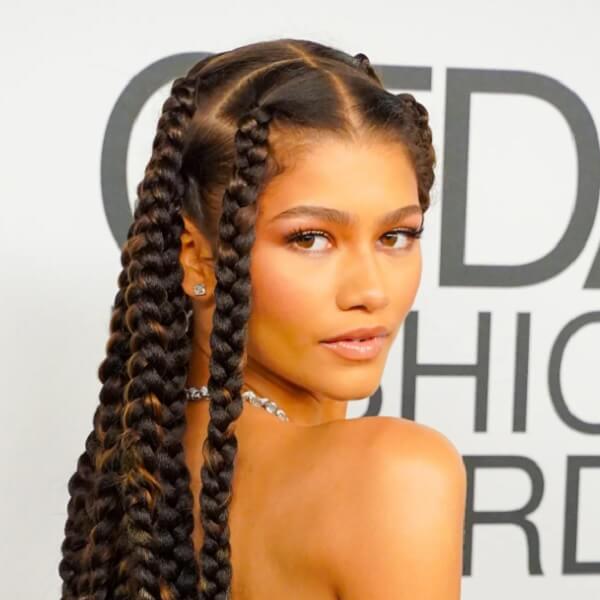
Box braids with face-framing pieces sit somewhere between a full braid install and a half-up style. The main braids are long, thick, and sectioned from a prominent middle part, while a few shorter braids are left loose around the face. It is a look that works best on thick, wavy hair at long length, where the weight of the braids creates a natural drape. The dark brown base with subtle highlights adds depth without requiring a full color commitment.
Ask your stylist for: long box braids with face-framing pieces and a middle part. The honest trade-off is installation time: expect several hours in the chair to get the parting and the face-framing sections right. The shorter pieces also need more frequent attention than the rest, since they are more exposed to friction from jackets and pillowcases. A light pomade on the face-framing strands keeps them smooth, and a satin bonnet at night extends the whole set by a week or two. Skip this one if you are not prepared for the upkeep on those front pieces.
Final Thoughts
For a low-maintenance approach, stick with thicker box braids or cornrows and a clean middle or straight parting. If you want visual impact, geometric partings deliver but expect a longer salon session and more careful upkeep at home. Parting braids offer endless design possibilities.
- Maintain scalp hygiene with a braid spray or diluted witch hazel on a cotton pad, focusing on the parting lines.
- Sleep with a silk or satin bonnet or scarf to protect braids from frizz and breakage.
- Avoid excessive manipulation of the braids to preserve the parting and prevent tension.
- Moisturize the scalp and braids with a light oil or serum as needed, typically every few days.